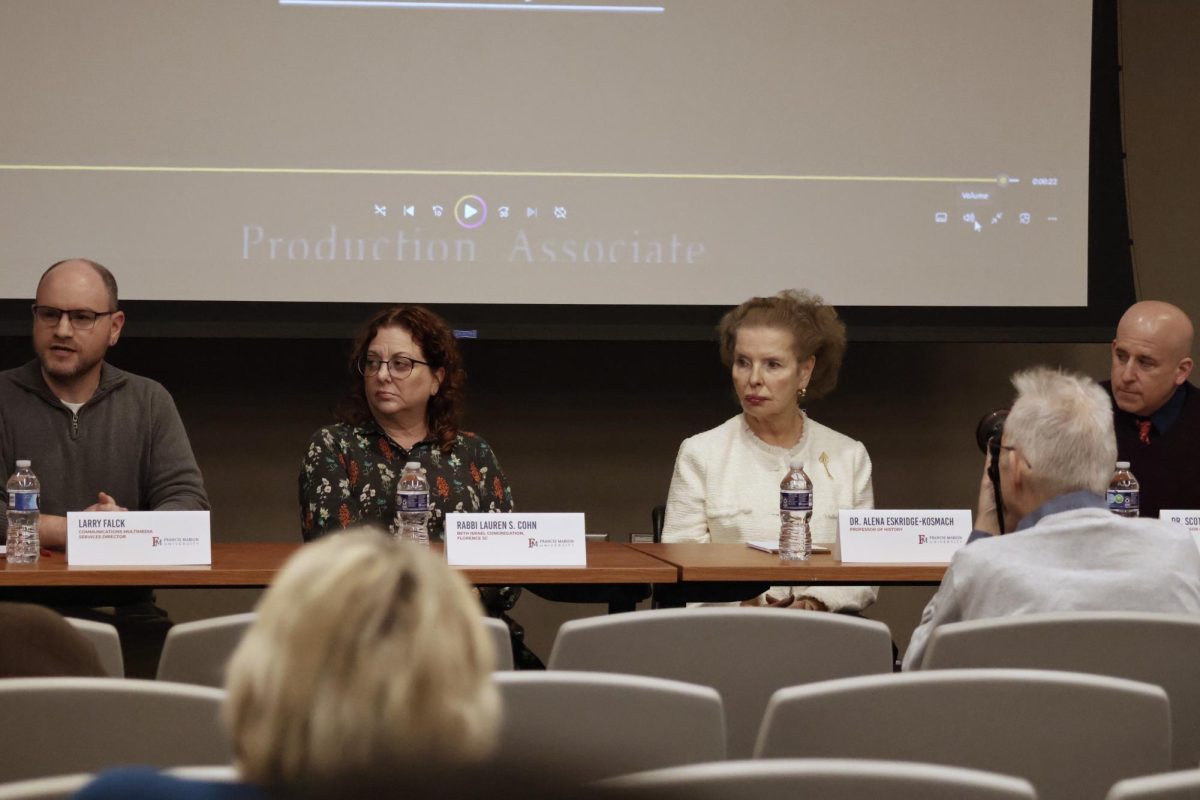
To honor the lives lost during the Holocaust, Francis Marion University hosted a Holocaust Remembrance Day event on Jan. 27 in Harris Auditorium.
Holocaust Remembrance Day is a nationally observed period of commemoration for victims, led annually by the U.S. Holocaust Memorial Museum. The campus event lasted from 4 to 5 p.m. While student turnout was limited, about eight faculty and staff members attended.
After a brief introduction, a short documentary about Holocaust survivor Gerda Weissmann was shown. The film detailed Weissmann’s experiences during the Holocaust.
Following the documentary, a panel discussion featured Scott Kaufman, Alena N. Eskridge-Kosmach, Rabbi Lauren Cohn and Larry Falck.
Kaufman, a history professor at FMU, said he and his wife are Jewish and that both had family members who experienced the Holocaust. He said the event emphasized the importance of remembering history as antisemitism increases.
“I think it is a testament to the need for us to remember the past, to notice that antisemitism is on the rise again,” Kaufman said.
Falck, director of multimedia services at FMU, brought personal artifacts belonging to his great-grandfather and grandfather. He shared his family’s connection to the Holocaust.
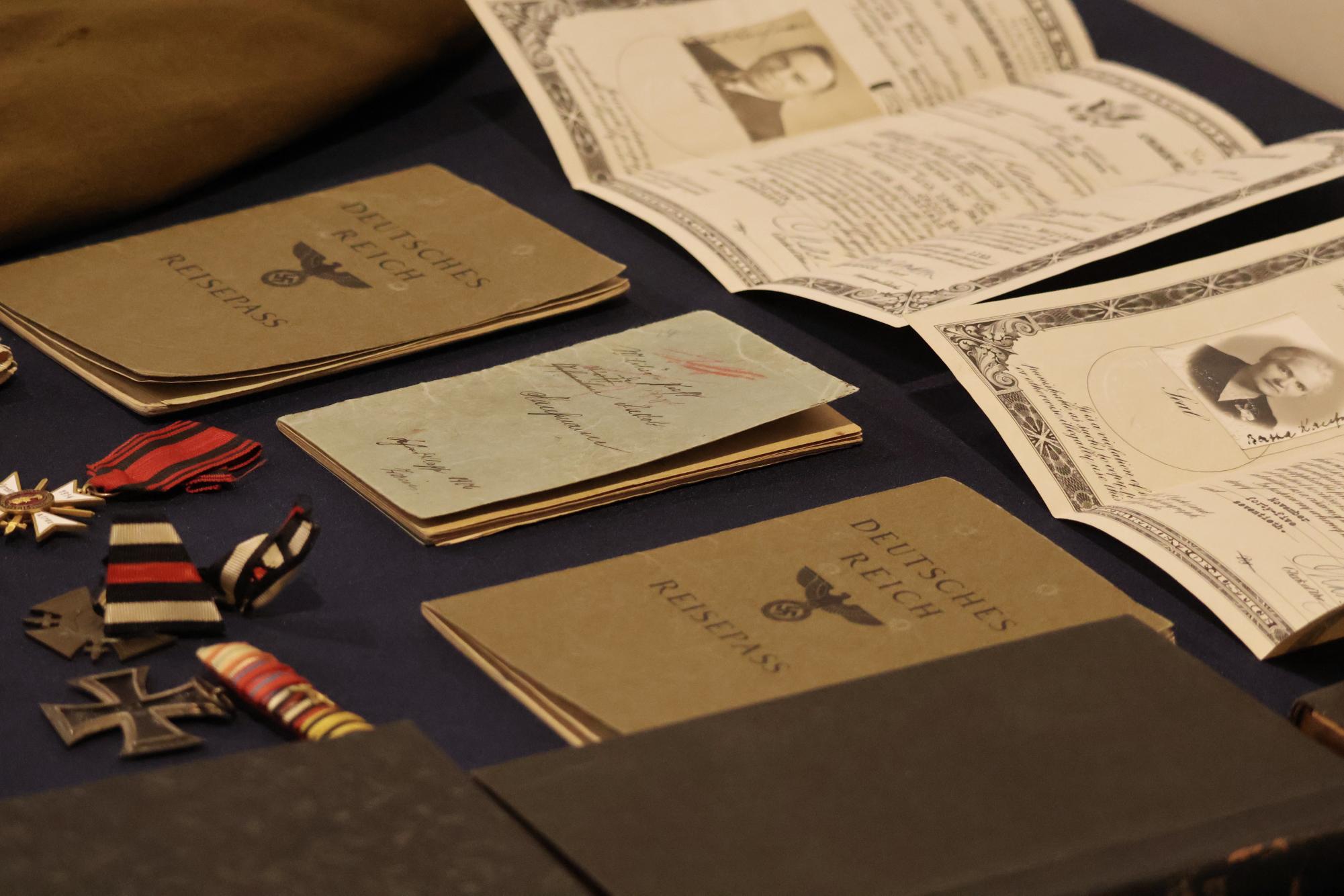
“My great-grandfather was in a camp for a while. His passports are over there,” Falck said.
Cohn, who has served as a congregational leader since July 1, 2025, discussed her family history, noting that no one in her immediate or extended family died in the Holocaust. She also said her son participated in a March of the Living tour, during which he visited a concentration camp.
Eskridge-Kosmach, a history professor who teaches European history at FMU, said she has taught in Belarus, Canada and the United States. She also spoke about her connection to Jewish communities, noting that many of her closest friends growing up were Jewish.
During the panel, audience members were initially hesitant to ask questions. To encourage discussion, panelists shared information about Holocaust memorials in Europe and Washington, D.C. Audience members later contributed their own experiences, prompting further discussion with the panelists.
As the event concluded, panelists were asked what they believed was the most important takeaway from the Holocaust. Falck said it was essential to remember that ordinary people carried out the atrocities, noting that while the actions began with extremists, they spread to the broader population. Other panelists offered different but similarly themed responses.
The event aimed to remember the Holocaust and remind attendees why its history must be preserved. When asked outside the panel about student attendance, Falck emphasized the importance of educating younger generations.
“They’re the future. The more they can learn about it and continue the story, the better,” Falck said.